
 English
  Español
  简体中文
简体中文  繁體中文
繁體中文  한국어
한국어  Português

Unity Software shares jumped 13% to $19.39 in premarket trading on Friday, briefly beating the S&P 500. Investors liked the company’s decision to cut weak assets and focus on AI-powered revenue growth.
The main reasons were a strong first-quarter revenue outlook and Unity’s plan to shut down its ironSource Ads Network on April 30 and to sell its Supersonic game publishing business. These two units generated about $360 million for Unity’s Grow Solutions in 2025, but ironSource’s share price kept falling and was set to fall further in 2026. By leaving these businesses, Unity removes obstacles to its own growth. Analysts see this as a move toward faster gains and better profits.
The numbers back this up. Without ironSource and Supersonic, Unity’s Grow division saw revenue jump 48% last quarter, which is twice the growth rate seen when those units were included. The Vector AI advertising platform is now the main driver of growth, with first-quarter revenue expected to rise 15% from the previous quarter, up from the earlier forecast of 10%. Unity now expects first-quarter revenue between $505 million and $508 million, a 17% increase from last year and well above the previous outlook of $480 million to $490 million and the analyst consensus of about $488.9 millionProfitability guidance was also better than expected. Unity expects adjusted EBITDA between $130 million and $135 million for the quarter, with a 26% adjusted EBITDA margin. This is well above the previous guidance of $105 million to $110 million.
After years of leadership changes, pricing issues, and layoffs, this margin gain is a key step in restoring operational credibility for Unity.
Caution is still needed. Without guidance for the second quarter, it is hard to know if these positive trends will last.
More broadly, AI-based development tools are making game creation easier by lowering technical barriers. These tools allow for both asset creation and full game experiences through AI prompts. This could reduce developers’ dependence on engines like Unity’s, posing a significant long-term risk to Unity’s business model and market relevance.
The stock’s history matters for traders weighing today’s risks and rewards. Unity went public at $52 in 2020, peaked at $210 in November 2021, then dropped sharply due to higher interest rates, leadership turnover, and a pricing model change that upset developers.
At under $20, the stock is still far from its peak. However, Friday’s premarket jump suggests that investors may be starting to believe Unity’s restructuring is beginning to work.
 Featured Courses
Recent news
OpenAI Weighs 5% U.S. Government Stake Ahead of Blockbuster IPO
OpenAI has held discussions about offering the U.S. government a 5% ownership stake, potentially structured through a sovereign wealth fund, according to a Financial Times report citing people familiar with the matter. The ChatGPT maker did not immediately respond to a request for comment. The move would add Washington to an already formidable roster of […]
Tesla Deliveries Loom as Investors Bet on Second Straight Quarterly Gain
Tesla is poised to report second-quarter delivery figures Thursday morning, capping a period marked by geopolitical conflict, a spike in oil prices, and continued fallout from shifting U.S. electric-vehicle policy. The automaker’s shares have rallied sharply ahead of the report, a signal that investors anticipate a strong outcome. Even so, forecasts vary widely enough that […]
Nvidia Stock Trails Chip Peers in First Half as Competition Broadens
Nvidia shares rose 0.4% to $195.75 in premarket trading on Tuesday, ending a first half that trailed the broader semiconductor sector. The stock is up 4.5% for the year through Monday, much less than the PHLX Semiconductor Index’s 94% gain over the same period. Here’s a look at why Nvidia has underperformed and what investors […]
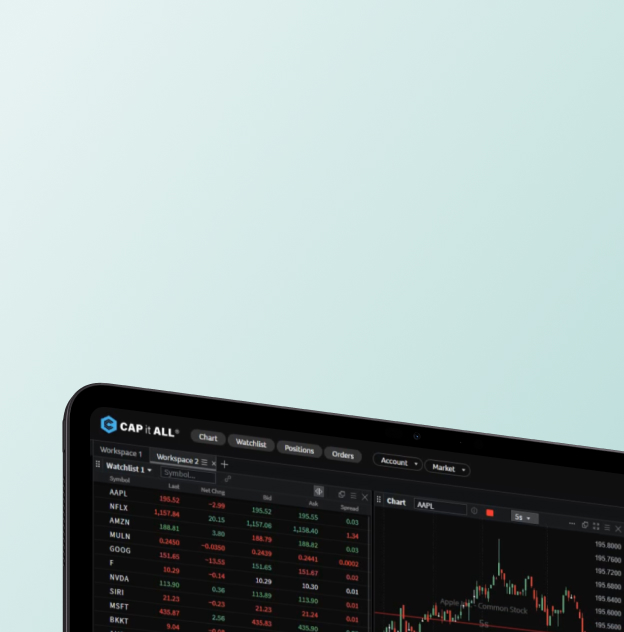
Trade with fewer limits
Day trade with fewer limits at fast speed. Buy stocks and ETFs at low fees.