

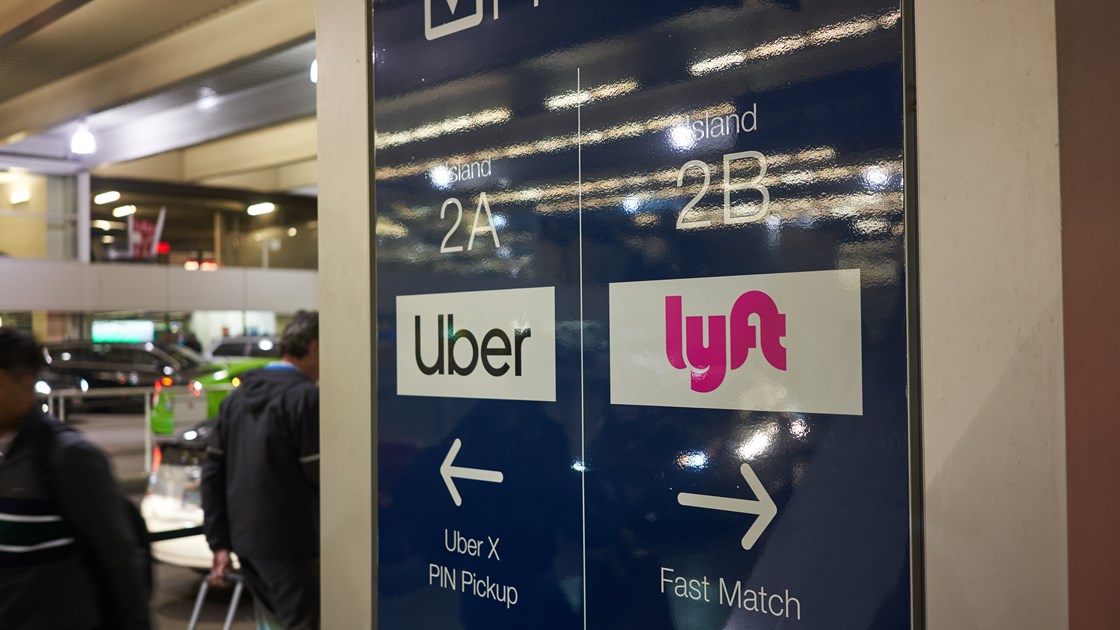
Ticker Symbol: UBER, LYFT, DASH
Shares in companies that rely on “gig workers” declined sharply today after the U.S. Department of Labor issued a proposal that could result in many contract workers at companies such as Uber and DoorDash be reclassified as employees. Shares in Uber were down 6.1% in the afternoon trading session, whiles shares in Lyft and DoorDash were down 6.6% and 3.1%, respectively. All three companies have struggled to keep up with the S&P 500 on a year-to-date basis.
The change in classification could have a major impact on the profitability of ride-sharing companies that generally rely on their drivers to purchase, maintain, and fuel their own vehicles to carry out the services of the companies they work for. If the proposal is implemented as a rule, labor costs for these companies would also skyrocket because they would have to pay additional taxes and could have to provide benefits to their newly classified employees.
Interested parties, including labor unions, individual drivers and affected companies have 45 days to comment on the proposal which the Department of Labor would then have to review. The changes would fall under the Fair Labor Standards Act, stipulating benefits and protections for employees, such as a minimum wage, paid overtime, and contributions to unemployment insurance.
The government said the new independent contractor rule is intended to “protect workers’ basic rights” and to make it easier for employers to properly classify their workers. The revised rules would revert back to the Obama era guidelines and reverse a Trump administration interpretation of the law’s application to contract workers. Ridesharing, restaurant delivery and courier service companies have become reliant on millions of part-time gig workers over the past decade.
The companies argue that the current structure allows for flexibility and self-proprietorship of their workers, while the labor rights advocates have argued that the current rules allow companies to take advantage of their workers due to lax oversight. Uber, however, has argued in the past that a vast majority of its drivers earn significantly more than the minimum wage, and those that do not, work very minimal hours on the company’s platform.
This content is provided for general information purposes only and is not to be taken as investment advice nor as a recommendation for any security, investment strategy or investment account.
 Featured Courses
Recent news

Microsoft Heads for Worst Quarter Since 2008
Microsoft is facing its largest quarterly decline since 2008. Shares are down about 25% this quarter, making it the weakest Magnificent Seven member by a wide margin. The group is down roughly 14%. The stock fell another 1.7% after Friday’s open, marking a fourth consecutive day of losses. Two primary risks are driving Microsoft’s selloff […]
Unity Stock Surges 13% on AI-Focused Restructuring
Unity Software shares jumped 13% to $19.39 in premarket trading on Friday, briefly beating the S&P 500. Investors liked the company’s decision to cut weak assets and focus on AI-powered revenue growth. The main reasons were a strong first-quarter revenue outlook and Unity’s plan to shut down its ironSource Ads Network on April 30 and […]
NVIDIA Cheaper Than the S&P 500: Is This the Floor?
NVIDIA’s stock is now at its lowest valuation relative to the broader market in over ten years. This creates a rare buying opportunity for investors, as bargain hunters and long-term investors may find the historically low valuation appealing despite ongoing pressure on AI-related technology stocks. The main thesis is that NVIDIA is a unique investment […]
Trade with fewer limits
Day trade with fewer limits at fast speed. Buy stocks and ETFs at low fees.